Wall Street Courier - The Site for Market Technicians, Market Timers and Day Traders |
What we offer you: The proven technical market indicators of the Wall Street pros, techniques and strategies for day trading. Furthermore one of the best technical stock market analysis online! |
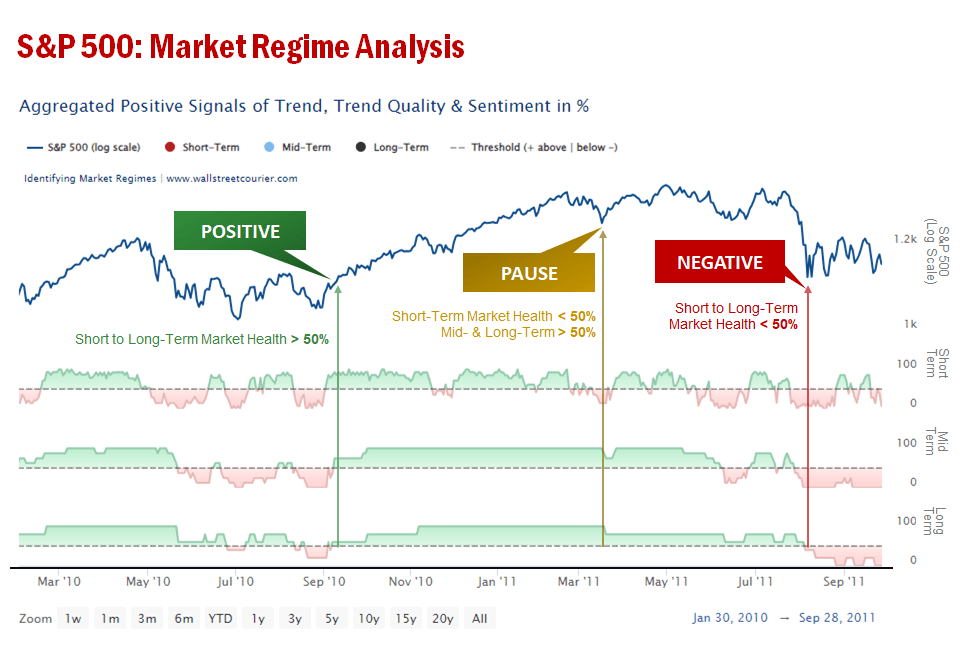
Are you tired of losing money in the market? Are you searching for the breakthrough formula or the Holy Grail of the stock market? Would you like to have the same competitive edge as some of the most successful traders and investors on Wall Street? You'd never guess how simple but powerful the answer is. The only intelligent way to approach the market is simply to watch what the so called "Smart Money" is doing and you can eliminate much of the stress by calmly following what the pros do. Almost everyone has heard of "Smart Money", "Dumb Money" and the so called "Crowd", and that is exactly what our indicators are all about. Just ask yourself these questions: Would you be a buyer if you see that the public and the odd-lot investors (dumb money) go on a buying spree while NYSE specialists and members (smart money) are heavily short at the same time? Do you know when to part company with the crowd and take profits? The key is knowing what the smart guys are doing and nothing else compares to to our Smart Money Flow Index, the closely guarded secret of the Wall Street pros until now. This magnificent indicator has called every major top and bottom since we are online.
Click here to enter Wall Street Courier - The Site of Technical Market Indicators and Market Analysis!
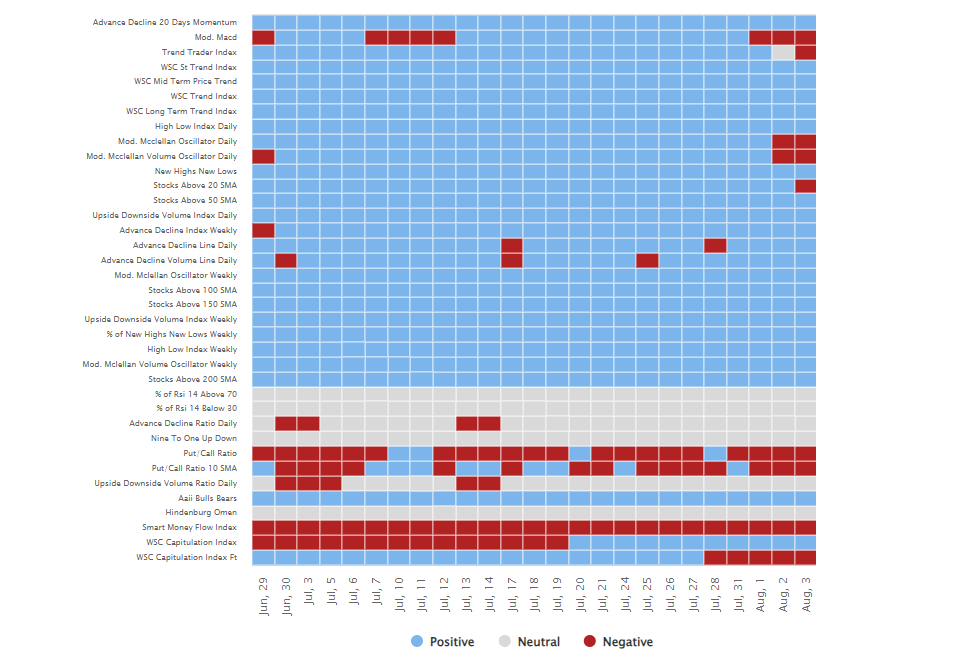
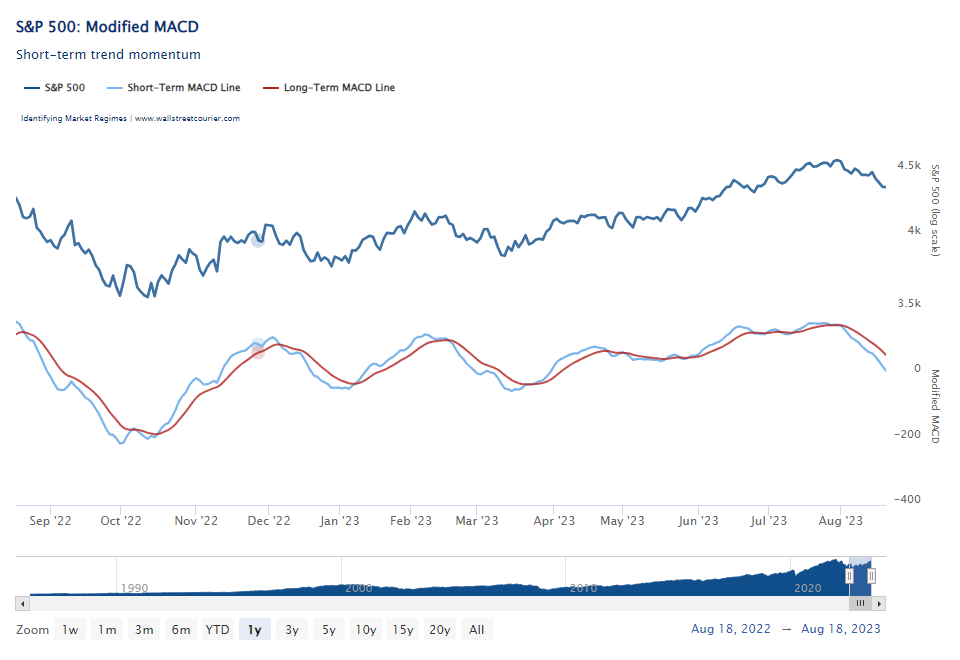
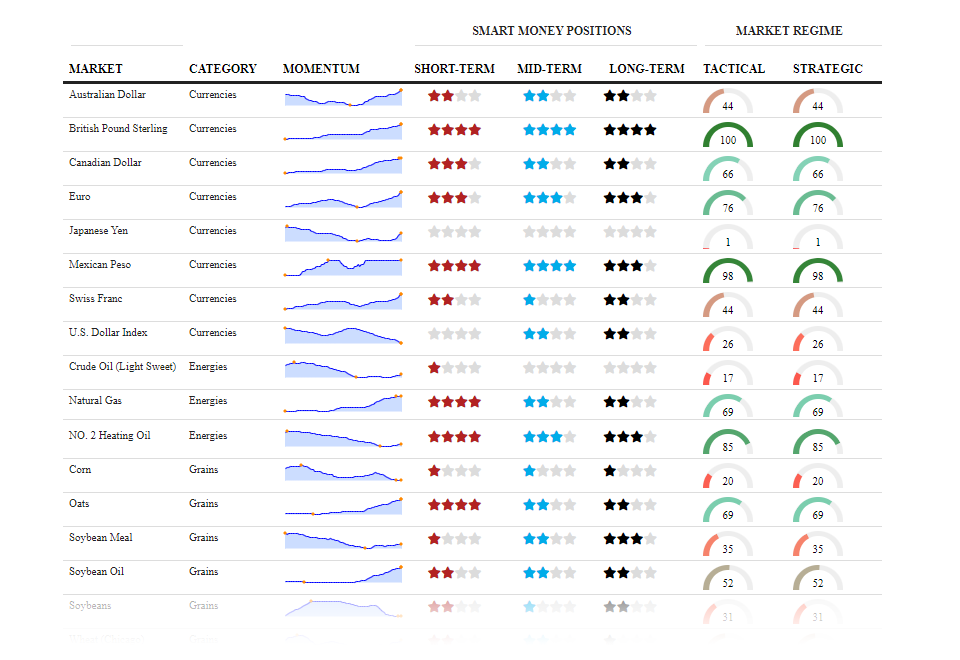
We offer you the following indicators for your best stock market timing and your technical analysis decisions:
|
The finest indicators available and charted date from official sourcesWe provide our subscribers with charted data from official sources and some of the finest indicators available. Top performing money managers, savvy investors, institutions and pension funds are relying on them. Like Wall Street's most closely-guarded secret, the Smart Money Flow Index for instance, which is also featured on the BLOOMBERG PROFESSIONAL Service under SMART <Index> <GO>. Get the best tips about technical market analysis you may ever receive and learn the secrets of Wall Street's wealthiest market players about market timing. There is a 5-year track record of every indicator enclosed for your convenience. Just compare our indicators by minimizing the linked charts of the S&P 500 and the Dow Jones and you will soon know why we became such a respected source for financial information on the web. All indicators are listed in our Site Map and also described and explained in our free E-Book of Technical Market Indicators. In our member section we have charts and indicators you won't see anywhere in the web. For instance 6 years of market action in our historical charts! We offer also a weekly Indicator Watch column where we interpret our charts and single out indicators which give strong signals. |
|
|
Advance-Decline IndicatorsThe Advance-Decline Line is a market breadth indicator and should be compared to the other market indices like the Dow Jones or S&P 500. Daily or weekly NYSE data is used in the calculation. Because the Advance-Decline Line reflects the action of the general market, any divergences are watched closely by market technicians. As long as the Dow and the Advance-Decline Line are moving in the same direction the trend will continue. If the Dow makes a new high which is not confirmed by a high of the Advance-Decline Line, caution is warranted. Vice versa, if the Dow makes a new low and the Advance-Decline Line doesn't you should cover your short sales. To calculate your own weekly Advance-Decline Line is very simple and
you can begin your calculations at any time. Just pick a large enough
base number like 100000. Then you calculate each week (or day) the difference
between advances and declines by adding the advances and subtracting the
declines. If you have 1269 advances and 1457 declines on your first week,
the reading of your newly created weekly Advance-Decline Line would be
99812
Advance-Decline Index WeeklyThe Advance-Decline Index is also market breadth indicator. It is calculated by dividing the number of advancing issues by the number of declining issues using daily or weekly NYSE data. It works very well as an overbought/oversold indicator and as a momentum indicator. A moving average should be used to smooth out the swings. Historical chart also available!
Advance-Decline Line DailyTo calculate your own daily Advance-Decline Line is very simple and you can begin your calculations at any time. Just pick a large enough base number like 100000. Then you calculate each day the difference between advances and declines by adding the advances and subtracting the declines. If you have 1269 advances and 1457 declines on your first day, the reading of your newly created daily Advance-Decline Line would be 99812. Historical chart also available!
Advance-Decline Lines in PercentThe Advance-Decline Index is also market breadth indicator. It is calculated by dividing the number of advancing issues by the number of declining issues using daily or weekly NYSE data. It works very well as an overbought/oversold indicator and as a momentum indicator. We calculate the A/D line also in percent for better comparison. Historical chart also available!
Advance-Decline Volume LineThe Upside-Downside Volume Ratio is also market breadth indicator. It is calculated by dividing the volume of advancing issues by the volume of declining issues, using daily or weekly NYSE data. It works very well as an overbought/oversold indicator and as well as a momentum indicator. A moving average should be used to smooth out the swings. Historical chart also available!
Advance-Decline Line WeeklyTo calculate your own weekly Advance-Decline Line is very simple and you can begin your calculations at any time. Just pick a large enough base number like 100000. Then you calculate each week (or day) the difference between advances and declines by adding the advances and subtracting the declines. If you have 1269 advances and 1457 declines on your first week, the reading of your newly created weekly Advance-Decline Line would be 99812. Historical chart also available!
Upside-Downside Volume Index WeeklyThe Upside-Downside Volume Ratio is also market breadth indicator. It is calculated by dividing the volume of advancing issues by the volume of declining issues, using daily or weekly NYSE data. It works very well as an overbought/oversold indicator and as well as a momentum indicator. A moving average should be used to smooth out the swings. Historical chart also available!
|
|
|
Market IndicatorsAre you tired of losing money in the market? Are you searching for the breakthrough formula or the Holy Grail of the stock market? Would you like to have the same competitive edge as some of the most successful traders and investors on Wall Street? You'd never guess how simple but powerful the answer is. The only intelligent way to approach the market is simply to watch what the so called "Smart Money" is doing and you can eliminate much of the stress by calmly following what the pros do. Almost everyone has heard of "Smart Money", "Dumb Money" and the so called "Crowd", and that is exactly what our indicators are all about. Just ask yourself these questions: Would you be a buyer if you see that the public and the odd-lot investors (dumb money) go on a buying spree while NYSE specialists and members (smart money) are heavily short at the same time? Do you know when to part company with the crowd and take profits? The key is knowing what the smart guys are doing and nothing else compares to to our Smart Money Flow Index, the closely guarded secret of the Wall Street pros until now. This magnificent indicator has called every major top and bottom since we are online.
High-Low IndexThis indicator is calculated by dividing the weekly number of highs and
lows by the number of total issues traded. A 10-week moving average is
applied to smooth out the swings. Like the advance-decline line, this
indicator produces signals when it diverges from the action of the indices
like the Dow Jones or the S&P 500. It is considered unhealthy for
the market climate if the indices make new highs without many stocks reaching
new highs at the same time. Historical chart also available! The High-Low Ratio is the number of new highs divided by the numbers of new lows. Daily or weekly data may be used in the calculation. Readings do get sometimes very distorted if there are for instance about 600 new highs and 5 new lows or vice versa. A long-period moving average should therefore be applied. Historical chart also available!
Investors SentimentThe principles of Contrarian Investing hold that when the vast majority of people agree on anything, they are generally wrong. Otherwise no market would function because there is simply no minority with money enough to make a majority rich. A true contrarian, therefore, will first try to determine what the majority are doing and then will act in the opposite direction. Market Vane, AAII and Investors Intelligence are all contrary opinion indicators. Historical chart also available! A unique feature of Market Vane's Bullish Consensus numbers is a weighting formula applied to the various market letters. More weight is given to letters with a larger following and less weight to those with fewer readers. Each week a poll of market letters is taken to determine the degree of bullishness or bearishness among futures professionals. The theory is that when a significant number of participants are bullish, they are already positioned on the long side and there is little potential buying power left. If most participants are bearish, selling pressure has reached an extreme and prices will reverse to the upside. Historical chart also available! Thanks to the Internet, the American Association of Individual Investors (AAII) now polls its 170,000 members daily. Respondents indicate how they feel about the market's performance in the next six months. The chart below shows the number of bulls divided by the number of bears. A 10-week moving average is applied to smooth out the swings. High readings appear near market tops and low readings near bottoms. Historical chart also available! Since 1963, Investors Intelligence has been compiling data on the opinions of publishers of market letters. They conduct a weekly poll of about 130 market newsletter writers and calculate the percentage who are bullish, bearish or expecting a short-term correction. The resulting index shows that the advisory services follow the trend of equity prices by becoming most bullish near market tops and most bearish around market bottoms. Historical chart also available!
The Global Futures Large Block Index and OscillatorThe Global Futures Large Block Index is calculated from the number of
upticks and downticks in large block transactions of single trades of
10 000 shares and over. An uptick is at a price higher than the last previous
trade and initiated by a buyer. A downtick is at a price lower than the
previous trade and initiated by a seller. The rationale behind the Large
Block Index is quite simple. It measures activities and extremes in institutional
sentiment and behavior. When the ratio of upticks rises to very high levels,
it indicates that the institutions are buying heavily, reaching a fully
invested position and therefore lowering their cash reserves.
Odd-Lot Short Sales/ Odd-Lot VolumeEvery short seller anticipates a declining stock market. A profit is made if the stock is bought back at a lower price than when it was sold short. Odd lot transactions are made by small investors who can not afford to buy or sell short a round lot of 100 shares of a stock. In the old days this indicator reflected the shorting activity of the smallest of the small guys who were usually dead wrong at bottoms and tops. Since the introduction of options however it has lost a lot of its value. Many traders also sell in 99-share lots in fast markets for a better execution of their orders. Year-end tax selling and subsequent reinvestment distort the odd lot statistics as well in the end of December and early in January every year. But the odd lot short sales are nevertheless an excellent indicator to measure prevailing negative sentiment in the market. Our chart shows the weekly odd-lot short sales divided by total weekly odd-lot volume on a 4-week moving average. Historical chart also available!
The NYSE Short Interest RatioEvery short seller anticipates a declining stock market. A profit is made if the stock is bought back at a lower price than when it was sold short. When a large amount of short selling activity is occurring, market participants obviously expect prices to head lower. The NYSE Short Interest Ratio is therefore a long-term contrary opinion sentiment indicator. It is calculated by dividing the monthly short interest figure released by the New York Stock Exchange by the average volume of trading per day. These numbers get sometimes distorted by arbitrage transactions but the Short Interest Ratio is nevertheless a good indicator of optimism or pessimism in the market. Short sellers are potential buyers sooner or later and represent a lot of buying power when they have to scramble for cover in a sudden market turn. Contrary indicators like ours require at least some degree of pessimism in order to function and therefore we watch this ratio very carefully. Historical chart also available!
Odd-Lot Short Sales DailyEvery short seller anticipates a declining stock market. A profit is made if the stock is bought back at a lower price than when it was sold short. Odd lot transactions are made by small investors who can not afford to buy or sell short a round lot of 100 shares of a stock. In the old days this indicator reflected the shorting activity of the smallest of the small guys who were usually dead wrong at bottoms and tops. Since the introduction of options however it has lost a lot of its value. Many traders also sell in 99-share lots in fast markets for a better execution of their orders. Year-end tax selling and subsequent reinvestment distort the odd lot statistics as well in the end of December and early in January every year. But the odd lot short sales are nevertheless an excellent indicator to measure prevailing negative sentiment in the market. The chart below shows the weekly odd-lot short sales in percentage of total volume on a 4-week moving average. Even if data are not quite up-to date, but they are nevertheless an excellent indicator of the prevailing sentiment in the market. The red line shows the weekly short sales of the more sophisticated and informed floor traders also on a 4-week moving average for comparison. Historical chart also available!
Program TradingProgram trading is the purchase or sale of at least 15 different stocks with a total value of $1 million or more. Stock-index arbitrage is defined as the sale or purchase of derivatives such as stock-index futures, to profit from the price difference between the basket and the derivatives. Under Rule 80A, when the DJIA moves 50 points or more from the previous day's close,index arbitrage orders in stocks of the Standard & Poor's 500 are subject to a special tick test. Program traders are contrarians. They buy into weekness and sell into strength. Some of Wall Streets biggest names are the players in this game and you should not bet against them. They are among others: Merrill Lynch Bear Stearns, First Boston, Morgan Stanley, Deutsche Bank Sec, and Nomura. Be assured that these people know exactly what they are doing.
Rydex Nova/Ursa RatioA good sentiment indicator is the Rydex Nova/Ursa ratio because it is backed by hard cash and not just polls. It reflects the sentiment of the small guys who put their money into funds. Speculators who invest in the Rydex Nova fund are considered bullish on stocks because the fund has a target performance benchmark equal to 150% of the S&P 500 index (SPX). The Ursa (bear) fund is designed to provide a performance inverse to that of the SPX by using a combination of short selling and options on stock index futures.
Odd-Lot Purchases/ NYSE VolumeOdd-lot transactions are made by small investors who can not afford to buy or sell short a round lot of 100 shares of a stock. In the old days this indicator reflected the activity of the smallest of the small guys who were usually dead wrong at bottoms and tops. Since the introduction of options however it has lost some of its value. Year-end tax selling and subsequent reinvestment distort the odd-lot statistics as well in the end of December and early in January every year. But the odd-lot purchases are nevertheless an excellent indicator to measure prevailing bullish sentiment of the crowd in the market. Our chart shows the weekly odd-lot purchases divided by the weekly NYSE volume on a 4-week moving average. Historical chart also available!
The Global Futures Trend IndexWhy are some traders more successful than others? There are probably as many answers as there are traders out there. But you will undoubtedly agree that most of the money is being made in a trend, especially as far as options and futures are concerned. In options trading your biggest enemy by far is time. You need to have the patience and discipline to wait for a trend in the market in order to succeed on the long run. The same rule applies to any short-term oriented trader. The Global Futures Trend Index shows you clearly when to enter the market. This index is computed by dividing the daily highs by the sum of the daily highs and lows. A 10-week moving average is applied to smooth out the swings. As long as the readings of this index stay above the 80%-level there is a solid bullish trend in progress. Any weakness should be used to go long or to buy call options, preferably of stocks which are in a clear uptrend, or stock index options. Readings below 20 indicate a bearish trend. Strong days should be used to short stocks which are already weak, or to buy put options. As long as this indicator is in neutral territory don't do anything unless you are a savvy stockpicker, insider or a long-term value investor.
Trin (Short Term Trading Index) - Arms IndexThe Short Term Trading Index (TRIN) was invented over 30 years ago by Richard Arms and is also known as ARMS Index. It is calculated by dividing advancing issues by declining issues and advancing volume by declining volume. The first result is then divided by the latter and the result is the TRIN. If the index is above one, the average volume of stocks that fell on the NYSE was greater than the average volume of stocks that rose and vice versa. But it is most confirmative when it reaches extremes. This indicator rises sharply when the market is most depressed and selling is climaxing, and falls to very low levels during buying frenzies. Historical chart also available!
Vix (Volatility Index) and Vix OscillatorVIX computes volatility of four OEX contracts in two nearby months and is published daily by the CBOE. Options selected for this index are one call and one put just out of the money, and one call and one put just in the money, for each of the two front months of the OEX (S&P 100). Extremely high readings of VIX indicate bottoms and low readings tops. Historical chart also available!
|
|
|
Call-Put IndicatorsThis indicator is calculated by dividing the daily or weekly volume of call options by the daily or weekly volume of put options. Big call volume appears at market tops and big put volume at bottoms. Only CBOE equity options or all CBOE options should be used for this indicator. Call/put ratios of the indices like OEX and SPX are distorted and clouded by arbitrage and hedging and do therefore not always reflect true investor sentiment.
Call/Put Ratio Open Interest of all CBOE OptionsThis indicator is calculated by dividing the weekly open interest of all CBOE call options by the weekly open interest of all CBOE put options. Big call volume appears at market tops and big put volume at bottoms. Historical chart also available!
Call/Put Oscillator of all CBOE OptionsThis indicator is calculated by dividing the weekly volume of all CBOE call options by the weekly volume of all CBOE put options. Big call volume appears at market tops and big put volume at bottoms. We use a 4-week moving average oscillating from the indicators 10-week moving average. Historical chart also available!
Call/Put Ratio of all CBOE OptionsThis indicator is calculated by dividing the daily or weekly volume of call options by the daily or weekly volume of put options. Big call volume appears at market tops and big put volume at bottoms. Only CBOE equity options or all CBOE options should be used for this indicator. Call/put ratios of the indices like OEX and SPX are distorted and clouded by arbitrage and hedging and do therefore not always reflect true investor sentiment. Historical chart also available!
Call/Put Oscillator of CBOE Equity OptionsThis indicator is calculated by dividing the weekly volume of call options by the weekly volume of put options. Big call volume appears at market tops and big put volume at bottoms. We use only CBOE equity options for this indicator. Call/put ratios of the indices like OEX and SPX are distorted and clouded by arbitrage and hedging and do therefore not reflect true investor sentiment. Historical chart also available!
Call/Put Ratio Open Interest of CBOE Equity OptionsThis indicator is calculated by dividing the weekly open interest of call options by the weekly open interest of put options. Big call volume appears at market tops and big put volume at bottoms. We use only CBOE equity options for this indicator. Call/put ratios of the indices like OEX and SPX are distorted and clouded by arbitrage and hedging and do therefore not reflect true investor sentiment. The chart below shows you the weekly call/put ratio of open interest on a 4-week moving average to smooth out the swings. Historical chart also available!
Call/Put Ratio of CBOE Equity OptionsThis indicator is calculated by dividing the weekly call options by the weekly put options. Big call volume appears at market tops and big put volume at bottoms. We use only CBOE equity options for this indicator. Call/put ratios of the indices like OEX and SPX are distorted and clouded by arbitrage and hedging and do therefore not reflect true investor sentiment. The chart below shows you the weekly call/put ratio of open interest on a 4-week moving average to smooth out the swings. Historical chart also available!
Index Options Call/Put Ratio Open Interest S&P 100 (OEX)This indicator is calculated by dividing the weekly open interest volume of S&P 100 call options by the weekly volume of S&P 100 put options. Big call volume appears at market tops and big put volume at bottoms. But call/put ratios of the indices like OEX and SPX are distorted and clouded by arbitrage and hedging and do therefore not always reflect true investor sentiment. Historical chart also available!
Index Options Call/Put Oscillator S&P 100 (OEX)This indicator is calculated by dividing the weekly volume of all S&P 100 call options by the weekly volume of all S&P 100 put options. Big call volume appears at market tops and big put volume at bottoms. Call/put ratios of the indices like OEX and SPX are distorted and clouded by arbitrage and hedging and do therefore not always reflect true investor sentiment. The chart below shows you a 4-week moving average oscillating from the indicators 10-week moving average. Historical chart also available!
Index Options Call/Put Ratio S&P 100 (OEX)This indicator is calculated by dividing the weekly volume of S&P 100 call options by the weekly volume of S&P 100 put options. Big call volume appears at market tops and big put volume at bottoms. But call/put ratios of the indices like OEX and SPX are distorted and clouded by arbitrage and hedging and do therefore not always reflect true investor sentiment. Historical chart also available!
Index Options Call/Put Ratio S&P 500This indicator is calculated by dividing the weekly volume of S&P 500 call options by the weekly volume of S&P 500 put options. Big call volume appears at market tops and big put volume at bottoms. But call/put ratios of the indices like OEX and SPX are distorted and clouded by arbitrage and hedging and do therefore not always reflect true investor sentiment. Historical chart also available!
Index Options Call/Put Ratio Open Interest S&P 500This indicator is calculated by dividing the weekly open interest volume of S&P 500 call options by the weekly volume of S&P 500 put options. Big call volume appears at market tops and big put volume at bottoms. But call/put ratios of the indices like OEX and SPX are distorted and clouded by arbitrage and hedging and do therefore not always reflect true investor sentiment. Historical chart also available!
Index Options Call/Put Oscillator S&P 500This indicator is calculated by dividing the weekly volume of all S&P 500 call options by the weekly volume of all S&P500 put options. Big call volume appears at market tops and big put volume at bottoms. Call/put ratios of the indices like OEX and SPX are distorted and clouded by arbitrage and hedging and do therefore not always reflect true investor sentiment. The chart below shows you a 4-week moving average oscillating from the indicators 10-week moving average. Historical chart also available!
Put/Volume OscillatorThe Global Futures Put/Volume Ratio is a market sentiment indicator. It is calculated by dividing the volume of CBOE equity put options by the NYSE volume on a weekly basis and is interpreted in a contrary fashion. High readings signify extreme pessimism and fear, sometimes outright panic and indicate very often bottoms. Low readings of this indicator result from the anticipation of higher prices ahead and are therefore considered bearish. It is in our opinion more affirmative than the widely used put / call ratio which has gained widespread notice. The chart below shows you a weekly oscillator from the indicators 10-week moving average. Historical chart also available!
Put/Volume Ratiois a market sentiment indicator. It is calculated by dividing the volume of CBOE equity put options by the NYSE volume on a weekly basis and is interpreted in a contrary fashion. High readings signify extreme pessimism and fear, sometimes outright panic and indicate very often bottoms. Low readings of this indicator result from the anticipation of higher prices ahead and are therefore considered bearish. It is in our opinion more affirmative than the widely used put / call ratio which has gained widespread notice. Historical chart also available!
|
|
|
Timing IndicatorsThe right timing is the most important thing when you trade options, as you have probably found out meanwhile. We provide our subscribers with charted data from official sources and some of the finest indicators available. Top performing money managers, savvy investors, institutions and pension funds are relying on them. Like Wall Street's most closely-guarded secret, the Smart Money Flow Index for instance, which is also featured on the BLOOMBERG PROFESSIONAL Service under SMART <Index> <GO>. Get the best tips about technical market analysis you may ever receive and learn the secrets of Wall Street's wealthiest market players about market timing. There is a 5-year track record of every indicator enclosed for your convenience. Just compare our indicators by minimizing the linked charts of the S&P 500 and the Dow Jones and you will soon know why we became such a respected source for financial information on the web.
The Global Futures Bottom IndicatorThe Global Futures Bottom Indicator is a proprietary indicator of Global Futures. To our knowledge there is no previous mentioning of this indicator in any financial publication. Please let us know immediately if you have ever read about it before. It does not appear very often but it is extremely reliable when the market is at a turning point. It prevents long-term investors from buying at the wrong time and works especially well for option traders because of its incredibly perfect timing. And the right timing is the most important thing when you trade options, as you have probably found out meanwhile. Unfortunately this indicator does not tell you when to sell. Set yourself a limit if you trade options or use trailing stop-loss orders if you are a long-term investor. Historical chart also available!
The Global Futures Fear IndicatorThe Global Futures Fear Indicator is a proprietary indicator of Global
Futures and not available anywhere else. It was unknown until now to the
investment community and to our knowledge there is no previous mentioning
of this indicator in any financial publication. The Global Futures Indicator
gives buy signals when it has readings between 0 and 10.
The Global Futures Market Timer IndexThe Global Futures Market Timer Index is a proprietary indicator of Global
Futures and not available anywhere else. It was unknown until now to the
investment community and to our knowledge there is no previous mentioning
of this indicator in any financial publication. The Global Futures Market
Timer Index gives buy signals when it has readings below -0,20 and sell
signals above 0,50
The Global Futures Timing IndicatorThis indicator is unknown until now to the investment community and is
not available anywhere else. To our knowledge there is no previous mentioning
of this indicator in any financial publication. The Global Futures Timing
Indicator gives buy signals more often and is an excellent supplement
to our bottom indicator, especially when this one has readings between
6 and 25. It prevents investors from buying at the wrong time and it works
also very well for option speculators and position traders because of
its expert timing.
The Global Futures Trading IndexThe Global Futures Trading Index is a proprietary indicator of Global Futures. It shows bottoms and tops in trends and should be used together with the Global Futures Trend Index for exact timing. If the market is in a clear uptrend according to our trend index, go long if the Global Futures Trading Index shows a reading below 35. The reverse is true in a downtrend. Go short or buy puts if the index gives readings of 55 or above when the Global Futures Trend Index is below 20. Cover all your shorts if the index trades below 35 in a bearish trend. Please bear in mind that this index is a contrary indicator and therefore when these signals are given, they will be most likely contrary to most of the news of the moment and the opinions of the well known and most widely quoted gurus of Wall Street. Historical chart also available!
The Global Futures Trading Index OscillatorThe Global Futures Trading Index is a proprietary indicator of Global Futures. It shows bottoms and tops in trends and should be used together with the Global Futures Trend Index for exact timing. If the market is in a clear uptrend according to our trend index, go long if the Global Futures Trading Index shows a reading below 35. The reverse is true in a downtrend. Go short or buy puts if the index gives readings of 55 or above when the Global Futures Trend Index is below 20. Cover all your shorts if the index trades below 35 in a bearish trend. Please bear in mind that this index is a contrary indicator and therefore when these signals are given, they will be most likely contrary to most of the news of the moment and the opinions of the well known and most widely quoted gurus of Wall Street. The chart below shows you a weekly oscillator from the indicators 10-week moving average. Historical chart also available!
The Smart Money Flow IndexThe Smart Money Flow Index has long been one of the best kept secrets of Wall Street. Everybody knows the importance of a closing price and other last hour indicators like the Closing Tick, which we publish daily on our portal. The Smart Money Flow Index is therefore calculated according to a special formula by taking the action of the Dow in two time periods: the first 30 minutes and the last hour. The first 30 minutes represent emotional buying, driven by greed and fear of the crowd based on good and bad news There is also a lot of buying on market orders and short covering at the opening. Smart money waits until the end and they very often test the market before by shorting heavily just to see how the market reacts. Then they move in the big way. These heavy hitters also have the best possible information available to them and they do have the edge on all the other market participants. It is a clear buy signal if the Dow falls to a new low which is not confirmed by the SMFI. But whenever the Dow makes a high which is not confirmed by the SMFI there is trouble ahead (Chart below). Watching this indicator is like being on a plane and see the pilots jumping off with parachutes. This magnificent indicator has called every major top and bottom since we are online. We offer a daily version of our Smart Money Flow Index for active short-term traders in the Day Trading Section/Daily Market Indicators. Historical chart also available!
The Wall Street Courier IndexThe Wall Street Courier Index gives you a longer term picture of the stock market. Readings below 40 indicate a heavily oversold market which is ripe for an upturn. Readings above 50 flash a warning signal and you should use trailing stop-loss orders to protect your profits. This index serves longer-term oriented position traders very well. It is also a contrarian indicator and once again we would like to remind you that charts usually look most bullish at tops and most bearish at bottoms.This indicator has an excellent track record. Historical chart also available!
The Wall Street Courier Index OscillatorThe Wall Street Courier Index gives you a longer term picture of the stock market. Readings below 40 indicate a heavily oversold market which is ripe for an upturn. Readings above 50 flash a warning signal and you should use trailing stop-loss orders to protect your profits. This index serves longer-term oriented position traders very well. It is also a contrarian indicator and once again we would like to remind you that charts usually look most bullish at tops and most bearish at bottoms.This indicator has an excellent track record as you can see. The chart below shows you a weekly oscillator from the indicators 10-week moving average. Historical chart also available!
|
|
|
Precious MetalsOur Precious Metals section offers a wide range of excellent indicators. We offer the daily call/put ratio of the Philadelphia XAU Index and some other great indicators like the Barron's Gold Mining Index.
Barron's Gold Mining IndexThe Barron's Gold Mining Index is one of the most respected indicators for gold and precious metals traders.
Gold Price vs. Barron's Gold Mining IndexThis chart shows you the spread between the gold price and the Barron's Gold Mining Index. Whenever the Barron's Gold Mining Index trades below the price of gold is a great buying opportunity for gold stocks.
GoldThis chart shows you a 10-years weekly chart of gold.
SilverThis chart shows you a 10-years weekly chart of gold.
Spread Gold Price - Barron's Gold Mining IndexThis chart shows you the spread between the gold price and the Barron's Gold Mining Index. Whenever the Barron's Gold Mining Index trades below the price of gold is a great buying opportunity for gold stocks.
XauThe PHLX Gold&Silver Sector (XAU) is a capitalization-weighted index
composed of 12 companies involved in the gold and silver mining industry.
XAU was set to an initial value of 100 in January 1979; options commenced
trading on December 19, 1983.
Xau Put/Call RatioThis indicator is calculated by dividing the weekly volume of all XAU call options by the weekly volume of all XAU put options. Big call volume appears at market tops and big put volume at bottoms.
|
|
|
Commitments of Traders ReportsThe Commodity Futures Trading Commission (CFTC) provides inside information about purchases and sales of futures contracts. The largest players in each market are required to disclose their positions to the CFTC on a daily basis and this report is released weekly on Friday afternoon (the reporting requirement varies by commodity). These traders are separated into Commercial Hedgers and Large Speculators. The positions of Small Traders are calculated by subtracting the total of contracts held by the reporting groups from all the contracts outstanding (Small traders are not required to report their positions). Commercial Hedgers hold a significant informational edge over other traders as far as fundamental supply-and-demand statistics are concerned. They tend to be early, but they are usually right on the long run, quite contrary to the small traders. Extreme divergences in long and short positions of small traders, large speculators and commercial hedgers have proven to be reliable indicators of important trend changes. In such cases it is not advisable to bet against the commercial hedgers.
Live CattleThree different charts are available for each commodity:
CopperThree different charts are available for each commodity:
CornThree different charts are available for each commodity:
Crude OilThree different charts are available for each commodity:
GoldThree different charts are available for each commodity:
S&P 500Three different charts are available for each commodity:
SilverThree different charts are available for each commodity:
SoybeansThree different charts are available for each commodity:
SugarThree different charts are available for each commodity:
T-BondsThree different charts are available for each commodity:
WheatThree different charts are available for each commodity:
YenThree different charts are available for each commodity:
Euro FXThree different charts are available for each commodity:
|
|
|
Day Trading IndicatorsAdd a valuable tool to your day trading techniques. Discover the secrets
of the pros with Global Futures, whether you day trade stocks or futures.
Beat the market by trading only on certain market behaviors. These indicators
are meant for experienced day traders as a supplement to their trading
techniques and not as some magic get-rich formula. The following pages
will show you clearly how to profit from certain chart patterns and from
our special moving averages. The only thing you will have to do is to
wait until these chart patterns appear on your screen.
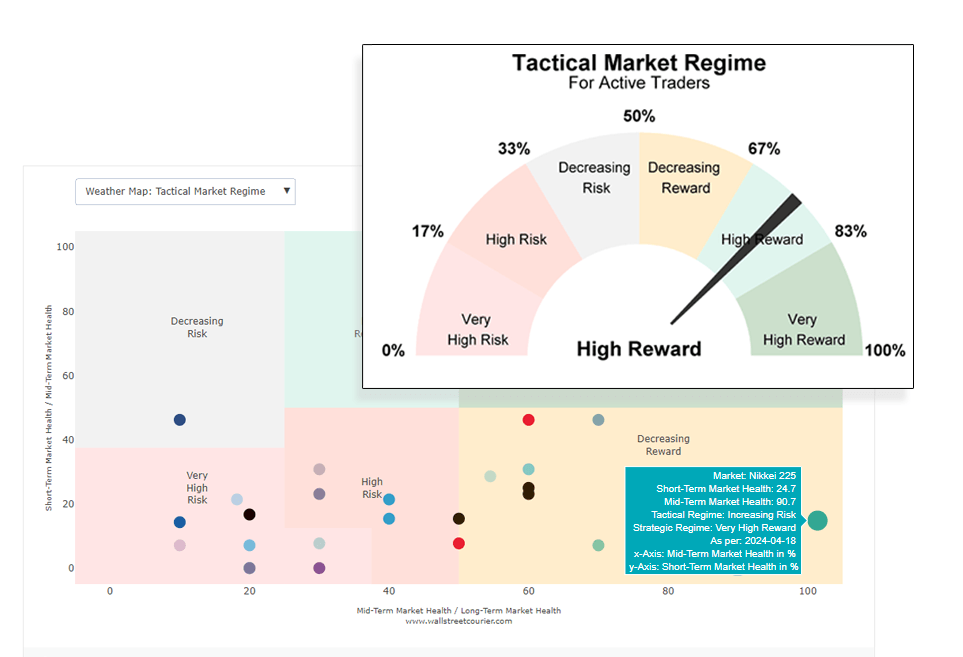
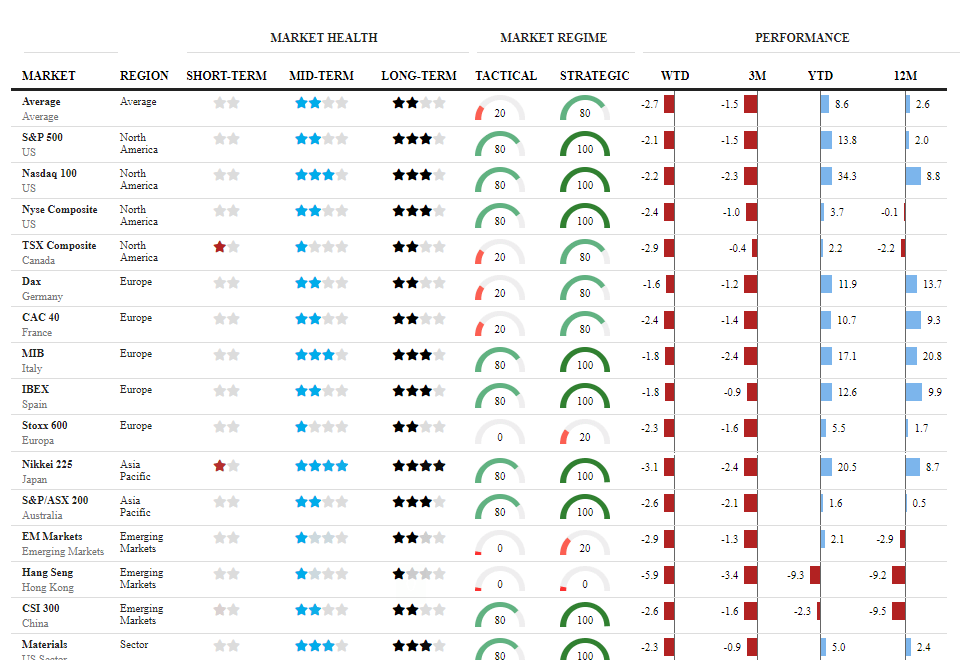
Daily Market IndicatorsDaily updated Smart Money Flow index and other proven indicators like advance-decline line, upside-downside volume, daily put-call ratio and daily Arms index and for active traders.
Daily Numerical IndicatorsFour weeks of daily market data for vacationing traders who keep their own spreadsheets.
The Global Futures Bullish Opening GapDiscover the secrets of the pros with Global Futures, whether you day
trade stocks or futures. Beat the market by trading only on certain market
behaviors. These indicators are meant for experienced day traders as a
supplement to their trading techniques and not as some magic get-rich
formula. What you need:
The Global Futures Bearish Opening GapDiscover the secrets of the pros with Global Futures, whether you day
trade stocks or futures. Beat the market by trading only on certain market
behaviors. These indicators are meant for experienced day traders as a
supplement to their trading techniques and not as some magic get-rich
formula. What you need:
The Global Futures Long and Short Entry SignalsDiscover the secrets of the pros with Global Futures, whether you day
trade stocks or futures. Beat the market by trading only on certain market
behaviors. These indicators are meant for experienced day traders as a
supplement to their trading techniques and not as some magic get-rich
formula. What you need:
The Global Futures Bullish Opening FormationDiscover the secrets of the pros with Global Futures, whether you day
trade stocks or futures. Beat the market by trading only on certain market
behaviors. These indicators are meant for experienced day traders as a
supplement to their trading techniques and not as some magic get-rich
formula. What you need:
The Global Futures Bearish Opening FormationDiscover the secrets of the pros with Global Futures, whether you day
trade stocks or futures. Beat the market by trading only on certain market
behaviors. These indicators are meant for experienced day traders as a
supplement to their trading techniques and not as some magic get-rich
formula. What you need:
The Global Futures Bullish Take-Off FormationDiscover the secrets of the pros with Global Futures, whether you day
trade stocks or futures. Beat the market by trading only on certain market
behaviors. These indicators are meant for experienced day traders as a
supplement to their trading techniques and not as some magic get-rich
formula. What you need:
The Global Futures Bearish Sell-Off FormationDiscover the secrets of the pros with Global Futures, whether you day
trade stocks or futures. Beat the market by trading only on certain market
behaviors. These indicators are meant for experienced day traders as a
supplement to their trading techniques and not as some magic get-rich
formula. What you need:
The Global Futures Bullish and Bearish Scalping TechniquesDiscover the secrets of the pros with Global Futures, whether you day
trade stocks or futures. Beat the market by trading only on certain market
behaviors. These indicators are meant for experienced day traders as a
supplement to their trading techniques and not as some magic get-rich
formula. What you need:
Market StrategyDiscover the secrets of the pros with Global Futures, whether you day
trade stocks or futures. Beat the market by trading only on certain market
behaviors. These indicators are meant for experienced day traders as a
supplement to their trading techniques and not as some magic get-rich
formula. What you need:
Trading RulesWe assume that you have already experience in day trading. A lot of good
books have been written about day trading and trading principles, so we
just want to mention some important rules which concern our indicators.
|
|